
The Nike Pegasus has been a training staple for decades. This reliable, versatile shoe works equally well for a beginner's first 5K or a marathoner's easy mileage days. But even a shoe with cult status can be improved with the addition of a supportive insole.
Replacing the flat factory liner in your Nike Pegasus can make a huge difference to the overall comfort and performance of the shoe. But what's the best insole to add to a Nike Pegasus? Which insole is going to give the best arch support and comfort? And how can you be sure the insole will fit properly?
In this post we'll explain why the Pegasus's factory insole falls short, and why the SOLE Performance Medium is the best insole you can add to your Nike Pegasus.
Do Nike Pegasus shoes need insoles?
The Pegasus's Zoom Air midsole is built for responsiveness. Its springy, energetic ride is part of why the shoe has stayed popular through more than 40 versions. But responsiveness in a midsole only goes so far when it isn't combined with a supportive insole.
The insole Nike ships inside the Pegasus is built to a budget, not to a foot. It's flat, thin, and interchangeable with what you'd find in dozens of other trainers on the shelf. Nothing about it is specific to the Pegasus or to you.
For all of Nike's engineering investment in the midsole, your foot is sitting on a flat pad with nothing supporting it from beneath. Replacing that flat factory liner with a proper supportive insole can help reduce strain in your feet, prevent fatigue, and improve biomechanics for efficient movement.

Arch support insoles for the Nike Pegasus.
The Pegasus's Zoom Air midsole is built to feel light and responsive underfoot, giving each stride a bit of spring back. But responsiveness has a cost: without a structured insole underneath, your arch is doing the stabilizing work on its own, stride after stride, for the length of your run.
SOLE footbeds feature our Signature Supportive Shape, with an arch that's clinically proven to reduce strain in your feet by an average of 34%. This makes SOLE an excellent option for runners managing plantar fasciitis, or anyone who notices their feet fatiguing in the later miles of a run in their Pegasus.
The arch support is dynamic: it flexes with your foot's natural motion with every step rather than locking it into place. That matters specifically for a shoe like the Pegasus, where part of the appeal is how naturally it moves with your stride. You're not trading that responsive feel for support. You're getting both: the Zoom Air still supplies the bounce, while the footbed underneath keeps your arch properly held through every one of those strides.
Insoles for neutral alignment in the Nike Pegasus.
SOLE's Signature Supportive Shape combines arch support with a deep heel cup to promote neutral alignment in your feet, ankles, and legs. Neutral alignment means your foot lands efficiently with each step, spreading pressure evenly across the bottom of your foot rather than concentrating it in one area.
It also means your body's chain of motion, from foot to ankle to knee to hip, is working on a stable, well-aligned base, avoiding issues like overpronation and supination.
This is especially valuable for Pegasus wearers logging higher mileage, where small inefficiencies in alignment compound over the length of a run, contributing to fatigue or overuse injuries over time.
Choose custom moldable insoles for Nike Pegasus.
Out of the box, a SOLE footbed already offers more structure than the factory insole it replaces. But the real benefit shows up once it's molded specifically to your foot. Wear it in your Pegasus and it will gradually take the shape of your foot and arch over a handful of runs. Or speed things up by heat molding it in your oven at home in a couple of minutes.
Once molded, the footbed sits in even, constant contact with the bottom of your foot rather than just touching at a few pressure points. That even contact is what actually reduces hot spots and fatigue over the miles. It's not just a supportive shape, but a supportive shape that's actually fitted to you.
It's also a fraction of the cost of a prescription orthotic. Because SOLE footbeds deliver a similar level of personalized support, doctors regularly recommend patients try them before paying for custom-made inserts. With a 90-day satisfaction guarantee, there's no risk in finding out if they work for you.
Zero drop insoles that won't alter your Pegasus's ride.
The Nike Pegasus has a 10mm heel-to-toe drop, a key part of its familiar, smooth ride. SOLE footbeds are built on a zero drop platform, meaning the heel and forefoot of the footbed sit at the same height. Adding a SOLE footbed to your Pegasus adds support and cushioning without altering the shoe's heel-to-toe drop at all. This means the ride you're used to stays exactly the same.
Insoles for flat feet in the Nike Pegasus.
People with flat feet or fallen arches are the most likely to experience excess strain and fatigue in their feet and ankles while they walk or run. This is because the arch of your foot helps promote proper alignment, shock absorption, and all round efficient movement.
Your arch also helps ensure efficient biomechanics further up your body's chain of motion, as far as your back. People with flat feet are particularly prone to issues like overpronation.
Adding footbeds with arch support to your shoes helps promote healthy alignment and efficient movement, while preventing excess strain on your feet, ankles, knees and hips. SOLE footbeds are an excellent choice for people with flat feet wearing Nike Pegasus.
Because they're heat moldable, they allow you to get the perfect amount of supportive comfort for your feet dialled in quickly.
Insoles with metatarsal pads for the Nike Pegasus.
If you experience metatarsalgia, Morton's neuroma, or numbness and tingling in your toes on longer runs in your Pegasus, consider a SOLE footbed with a built-in metatarsal pad.
A metatarsal pad, or Met Pad, is a small bump positioned to support your foot's transverse arch, which runs across the width of your foot. This promotes natural spread between your metatarsal bones, reducing pressure on the metatarsal heads and improving circulation in your forefoot.
The Met Pad is especially useful for higher-mileage Pegasus wearers. As your foot fatigues over longer distances, the forefoot bears repeated impact with every stride, which can lead to soreness, numbness, or cramping in the ball of the foot. A SOLE footbed with a Met Pad helps counteract that by supporting your metatarsal bones and keeping them properly spaced through every mile.
Insoles with built-in metatarsal pads for Nike Pegasus shoes.
Which SOLE footbed is best for the Nike Pegasus?
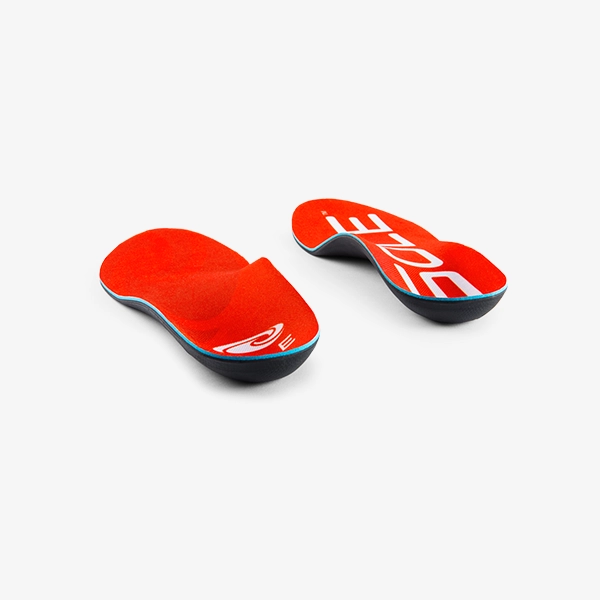
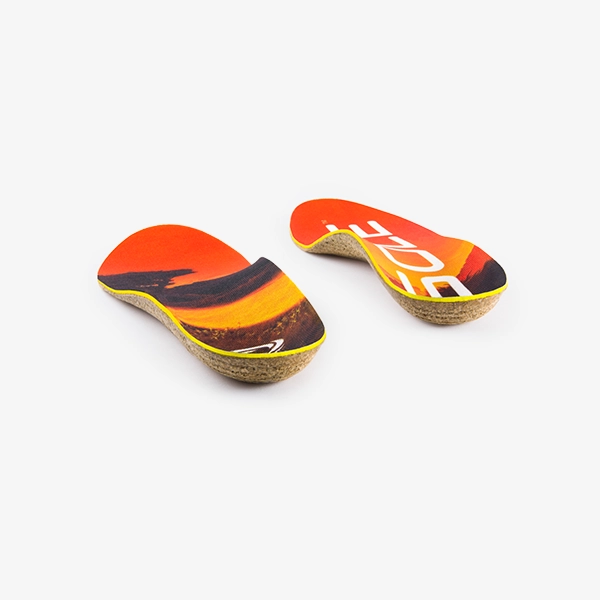
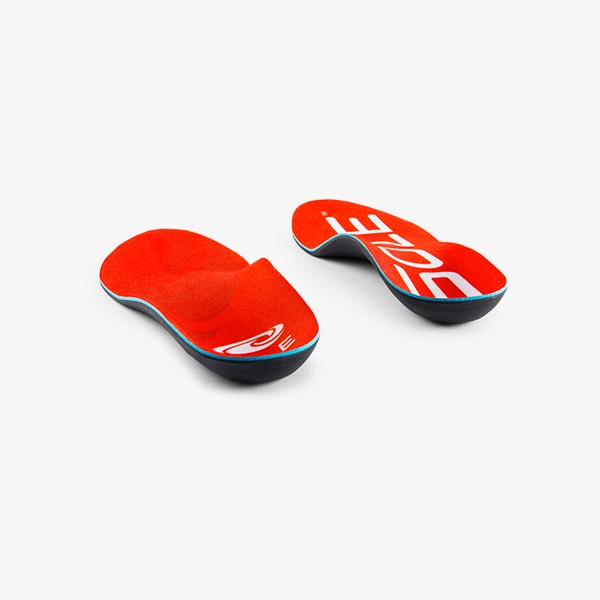
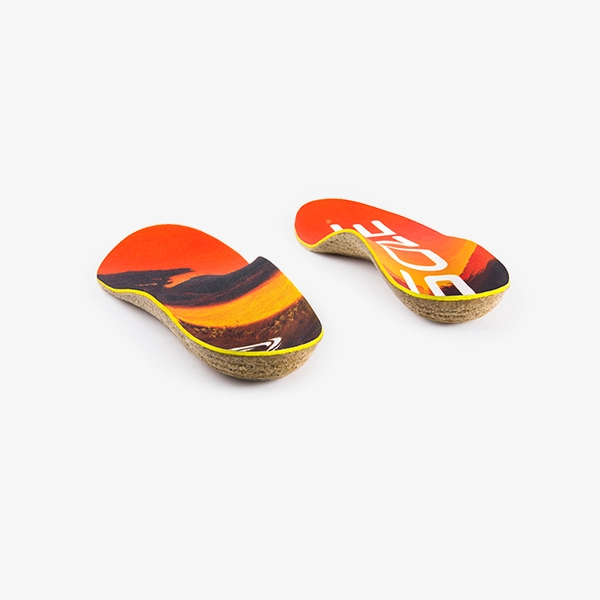
A medium thickness SOLE footbed is the best insole for a pair of Nike Pegasus. It combines all the crucial structural support of the SOLE Signature Supportive Shape with a layer of non-compressing foam cushioning that's great for absorbing impact as you run or walk.
Thanks to the classic, forgiving lacing system of the Pegasus, the Medium Thickness footbed is easily accommodated in the shoe without altering the fit.
The Performance Medium is made from recycled natural wine corks — a natural thermal insulator that also adds a touch of extra shock absorption and molds to your feet a little more quickly through wear. It's also available in a version with a built-in metatarsal pad.
The Active Medium offers a slightly more durable option, made from EVA plastic. It's also available with a built-in metatarsal pad.
All SOLE footbeds feature the same dynamic arch support, deep heel cup, and custom moldable base. They also all come with a 90-day satisfaction guarantee, so you can try them in your Pegasus and return them if they don't work for you.